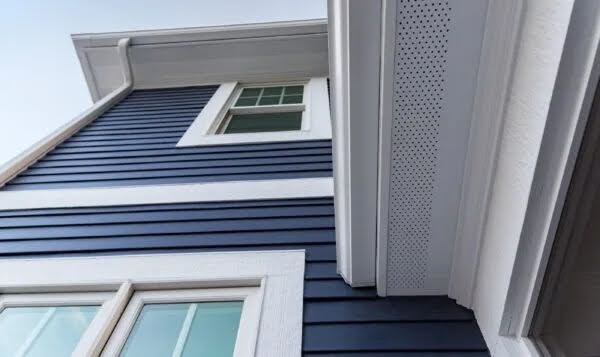
For contractors, siding and trim are more than exterior finishes—they’re performance systems that have to work together. When they’re coordinated correctly, you get clean lines, tight joints, and an exterior that holds up through seasonal swings. When they’re not, the problems show up fast: gaps, warped boards, moisture intrusion, failed inspections, and costly rework.
Most siding issues aren’t caused by poor workmanship or low-quality products. They’re caused by mismatched materials, overlooked movement requirements, or last-minute substitutions that force installers to improvise in the field. And once siding and trim are on the wall, fixing those mistakes is never cheap.
This guide breaks down why siding and trim coordination matters, where problems usually start, and how contractors can prevent issues before the first piece ever goes up.
Why Siding & Trim Coordination Matters for Long-Lasting Exteriors
Siding and trim may be ordered separately, but on the wall, they function as one system. Trim defines edges, transitions, and termination points. Siding depends on those details to expand, drain, and perform correctly.
When coordination is missing, installers are often forced to compromise. Expansion gaps get closed for appearance, profiles don’t line up, drainage paths are blocked, and manufacturer requirements are ignored. The result might look fine on install day, but exposure to heat, cold, and moisture eventually reveals every shortcut.
Proper siding and trim coordination helps maintain expansion clearances, prevents trapped moisture, creates clean transitions at windows and doors, speeds up installation, and reduces callbacks and warranty issues. In short, it protects both the building envelope and your margins.
Common Siding & Trim Problems Caused by Poor Coordination
Most exterior failures fall into a few predictable categories. Recognizing them early makes prevention much easier.
Gaps at Siding & Trim Transitions and Terminations
Gaps commonly appear where siding meets trim boards, corner assemblies, or window surrounds. These gaps are usually caused by incompatible material thicknesses, incorrect termination details, or ignored clearance requirements.
Even small gaps allow air and moisture intrusion, especially during freeze-thaw cycles. Over time, they grow, become visible, and turn into long-term performance problems.
Warping, Buckling, and Bowing in Siding & Trim Systems
Warping happens when materials are restrained from moving naturally. This often occurs when siding is tight-butted against trim, trim is installed flush without accounting for siding movement, or fasteners are overdriven near transitions.
Materials don’t fail immediately. They fail after repeated temperature swings. What looks flat on day one can buckle within a season.
Moisture Trapping Behind Siding & Trim Assemblies
When siding and trim details block drainage, moisture has nowhere to go. Trapped moisture can lead to rot in wood-based products, swelling or delamination, and mold or mildew behind the wall.
These are the most expensive issues to fix because they usually require removing finished exterior materials.
Rework and Callbacks from Poor Siding & Trim Coordination
Rework is often caused by trim selections finalized after siding takeoffs, last-minute material substitutions, or missed manufacturer requirements discovered during inspection. Fixing exterior mistakes costs far more than preventing them.
Material Movement: The Core Challenge in Siding & Trim
The biggest coordination challenge is movement. Every exterior material expands and contracts, but not at the same rate.
PVC trim expands significantly with heat. Wood-based products respond heavily to moisture. Fiber cement moves less, but still requires clearance. Engineered wood falls somewhere in between.
Problems occur when materials with different movement characteristics are forced into rigid assemblies. The solution isn’t avoiding certain materials—it’s understanding how they behave and detailing them correctly.
Planning Siding & Trim Materials as a System
Select Siding & Trim Materials Together
Siding and trim should be chosen as a package, not independently. Before ordering materials, confirm thickness compatibility, approved manufacturer pairings, and required clearances for both products.
Locking in siding before trim is finalized almost guarantees field adjustments later.
Follow Manufacturer Clearances for Siding & Trim Exactly
Clearances are not optional. They exist to prevent buckling, cracking, and moisture damage. Common mistakes include closing gaps for a tighter look or caulking joints that are meant to move.
When siding and trim requirements differ, always follow the larger clearance.
Choose the Right Profiles for Siding & Trim
Not every trim profile works with every siding style. Thick trim may require extended flashing, flat trim can restrict drainage behind lap siding, and narrow trim can look undersized once exposure is set.
Choosing compatible profiles upfront avoids awkward transitions and site-built fixes.
Installation Sequencing Matters for Siding & Trim
Installation order plays a major role in performance. In most cases, the correct sequence is weather-resistant barrier and flashing first, trim installation with integrated flashing next, and siding installed last so it can terminate cleanly into the trim.
Reversing this order often compromises flashing and traps moisture behind the cladding.
Supplying Professional-Grade Siding & Trim Materials
At Evolution Supply, siding and trim aren’t treated as separate line items. They’re treated as coordinated exterior systems designed for real jobsite conditions.
Evolution Supply offers a full range of professional-grade siding products selected for durability, consistency, and ease of installation. Options include fiber cement siding engineered for resistance to moisture, fire, impact, and pests; engineered wood siding that’s lightweight, stable, and easy to work with; and vinyl siding that delivers low maintenance, improved color retention, and reliable weather resistance. Architectural profiles such as lap, shake, and board-and-batten styles provide flexibility to meet both design intent and project specs.
All siding products are chosen with contractors in mind—easy to handle, fast to install, and backed by manufacturers known for consistent performance in the field.
Evolution Supply also provides trim products designed to coordinate cleanly with these siding systems. Options include PVC trim that resists moisture, insects, and rot; engineered wood trim that stays straight and stable across climate conditions; fiber cement trim designed to match fiber cement siding systems; and aluminum trim coil for custom fascia, soffit wraps, flashing, and edge detailing.
With reliable stock levels, job-site delivery, and materials that install the way they’re supposed to, Evolution Supply helps contractors avoid delays, substitutions, and last-minute compromises. They work directly with builders and contractors to supply exterior cladding systems that balance durability, aesthetic flexibility, and installation speed, no matter the project size.
Evolution Supply partners only with manufacturers that meet professional performance standards. Brands such as LP SmartSide®, AZEK®, and others are selected for their reliability, quality control, and proven track records in the field.
The Real Cost of Getting Siding & Trim Coordination Wrong
When siding and trim aren’t coordinated, the costs extend well beyond materials. Lost labor hours, schedule delays, failed inspections, warranty disputes, and damaged client trust all add up quickly.
On production builds, these problems multiply fast. On custom or commercial projects, they can cost future work. Coordination isn’t just a technical detail—it’s a business decision.
Final Thoughts on Siding & Trim Coordination
Siding and trim coordination doesn’t complicate exterior work—it simplifies it. When materials are selected together, detailed correctly, and installed in the right sequence, the result is fewer gaps, less warping, no unnecessary rework, and an exterior that performs long after the job is complete.
If you’re planning an upcoming project and want help coordinating siding and trim materials that actually work together, Evolution Supply is ready to help you make the right decisions early and avoid costly problems later.
Learn more about Evolution Supply’s siding and trim services here:
https://esbuildingmaterials.com/services/siding-trim
Frequently Asked Questions
Why do gaps form between siding & trim?
Gaps usually form when expansion clearances are ignored or when materials with different movement rates are installed too tightly together.
Can caulk prevent siding & trim movement issues?
Caulk can seal joints, but it should never be used to restrict material movement. Relying on caulk alone often leads to cracking and failure.
Is PVC trim compatible with all siding types?
PVC trim works with many siding systems, but it expands more than fiber cement or engineered wood. Proper spacing and detailing are critical.
When should trim be installed relative to siding & trim?
Trim should generally be installed after the weather-resistant barrier and flashing and before siding so siding can terminate cleanly into it.
How early should siding & trim be selected?
Ideally during planning or early framing. Early decisions reduce rework, delays, and installation conflicts later in the project.