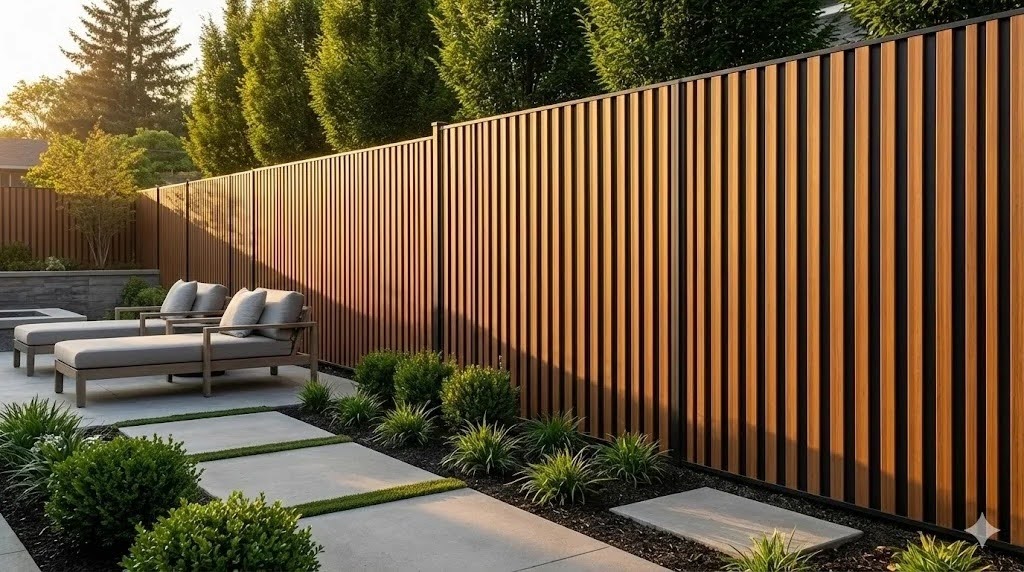
Privacy fencing demand is increasing significantly in summer 2026, driven by continued residential development, higher-density suburban construction, and homeowner preferences for defined outdoor living spaces. For contractors and builders, this shift is not just about volume—it is about delivering faster installs, cleaner material execution, and aligning with evolving buyer expectations.
Unlike previous cycles where fencing was often a secondary exterior element, privacy fencing is now frequently treated as part of broader exterior structures planning, alongside decks, patios, and landscaping layouts.
Builders working with suppliers like Evolution Supply are seeing increased demand for bundled fencing systems that support rapid deployment across multiple homes in a single development phase.
Material Selection Trends in Exterior Structures
Material selection is one of the most important decision points in 2026 privacy fencing projects. Contractors are increasingly choosing between vinyl, wood, aluminum, and chain-link based on project type rather than default preference.
Vinyl continues to lead in residential privacy applications due to its low maintenance and consistent appearance. Wood remains relevant for budget-conscious projects or traditional aesthetic requirements. Aluminum is increasingly used in decorative or mixed-visibility applications, while chain-link remains dominant in utility, commercial, and perimeter security builds.
In modern exterior planning, material selection is no longer isolated to fencing alone. It is tied directly to overall site design, especially in developments where fencing must coordinate with decks, exterior lighting, and shared community boundaries.
Key contractor considerations:
- vinyl offers predictable installation and low long-term maintenance
- wood requires more variability management but remains cost-effective
- aluminum supports premium and ornamental design integration
- chain-link prioritizes speed and functional security over aesthetics
Evolution Supply supports contractors by providing consistent access to all four fencing categories, allowing crews to standardize installation workflows across different job types.
Installation Speed Expectations in Exterior Structures
Installation speed has become a defining factor in fencing profitability during peak summer construction cycles. Labor availability remains tight in many regions, pushing contractors to prioritize systems that reduce install time without sacrificing structural integrity.
Privacy fencing systems in 2026 are increasingly designed for pre-planned layout execution. Vinyl systems benefit from modular post-and-panel designs that reduce cutting and field adjustments. Pre-stained or pre-finished wood systems are also gaining traction in residential subdivisions where consistency is critical across multiple lots.
Chain-link installations continue to offer the fastest install times overall, especially in large perimeter applications. Aluminum fencing, while slightly more installation-intensive, is increasingly pre-engineered for faster assembly than in previous product generations.
Within broader exterior planning workflows, fencing installation is often scheduled alongside other exterior components such as decks and pergolas. This requires tighter coordination between material deliveries and site sequencing to avoid delays caused by misaligned trades.
Efficiency drivers for contractors:
- pre-packaged fence kits reduce on-site fabrication
- standardized post spacing improves layout speed
- coordinated deliveries reduce downtime between phases
- clear material staging reduces rework and installation errors
Evolution Supply helps streamline these workflows by supplying coordinated fence packages designed for high-volume construction environments.
Residential Buyer Expectations in Privacy Fencing
Residential buyers in 2026 are significantly more informed about exterior materials than in previous construction cycles. Privacy fencing is no longer viewed purely as a functional boundary—it is now considered part of the home’s overall outdoor living experience.
In many developments, homeowners expect fencing to match or complement decks, siding, and architectural finishes. This is especially evident in planned communities where HOA requirements standardize exterior appearance across multiple properties.
Within modern exterior planning, privacy fencing is often expected to deliver:
- clean, uniform sightlines
- minimal maintenance requirements
- visual alignment with decking and patio systems
- long-term durability without frequent repair cycles
Vinyl fencing continues to gain traction due to its ability to meet these expectations with minimal upkeep. Wood remains desirable for natural aesthetics but often requires more explanation from contractors regarding maintenance expectations. Aluminum and ornamental fencing are increasingly used in front-yard or semi-visible applications where curb appeal is prioritized.
For builders, this means more time spent during pre-construction discussions aligning expectations with material realities. Misalignment here often leads to change orders or dissatisfaction after installation.
Design Integration in Exterior Structures
Privacy fencing is increasingly being designed as part of a unified exterior system rather than a standalone element. This includes coordination with decks, landscaping, and outdoor living spaces.
In exterior planning, fencing now plays a role in defining usable outdoor zones, creating privacy buffers for patios, and establishing boundaries for multi-purpose backyard layouts.
Decking, Railings & Exterior Structures Integration Trends
- privacy fencing paired directly with backyard deck installations
- coordinated gate placement aligned with exterior access paths
- matching materials between fencing and railing systems
- shared layout planning between fencing and landscaping teams
Evolution Supply supports this integration model by helping contractors source compatible fencing materials that align with broader exterior project requirements.
Supply Chain Efficiency in Privacy Fencing
As demand increases during summer 2026, supply chain efficiency becomes a critical factor in project execution. Delays in fencing materials can impact entire subdivision timelines, especially when fencing is installed in sequence across multiple properties.
Contractors are increasingly shifting toward pre-packaged fencing systems to reduce variability and simplify procurement. This approach reduces the likelihood of mismatched materials, missing components, or inconsistent product batches across phases of construction.
In high-volume exterior projects, consistent supply availability allows builders to maintain installation rhythm across multiple crews, minimizing downtime and improving overall productivity.
Evolution Supply plays a role in this process by providing contractors with consolidated access to fencing materials across vinyl, wood, aluminum, and chain-link systems, helping ensure continuity across large-scale builds.
What Contractors Should Expect Going Forward
Privacy fencing demand is expected to remain strong throughout 2026, particularly in residential subdivisions and suburban expansion zones. Contractors should expect continued emphasis on system-based installation methods, tighter scheduling windows, and increased material standardization. The most successful builders will be those who standardize material choices across project types, improve coordination between fencing and other exterior trades, reduce variability in installation methods across crews, and align early with supplier capabilities to avoid delays.
To explore integrated material solutions, learn more about Evolution Supply’s decking, railings & exterior structures materials and services at https://esbuildingmaterials.com/services/decking-railings-exterior-structures/ or request a quote at https://esbuildingmaterials.com/get-a-quote/
Frequently Asked Questions (FAQ)
Q: Why is privacy fencing demand increasing in summer 2026?
A: Increased residential construction, suburban development, and homeowner demand for defined outdoor living spaces are driving higher installation volumes.
Q: What is the most commonly used privacy fencing material in 2026?
A: Vinyl is currently the most widely used due to its low maintenance requirements and consistent appearance.
Q: Is wood fencing still a viable option for contractors?
A: Yes. Wood remains common in budget builds and projects where natural aesthetics are prioritized, but it requires more maintenance planning.
Q: What fencing type installs the fastest?
A: Chain-link typically installs the fastest, especially in large-scale perimeter applications.
Q: How are residential buyer expectations changing for privacy fencing?
A: Buyers now expect fencing to integrate visually with the home’s exterior design and require minimal maintenance over time.
Q: Are fencing projects being combined with other exterior work?
A: Yes. Privacy fencing is often installed alongside decks, patios, and other exterior structures in coordinated project phases.
Q: How can contractors improve fencing installation efficiency?
A: Using pre-packaged systems, standardizing layouts, and coordinating material delivery schedules can significantly reduce install time.
Q: Does Evolution Supply support large-scale fencing projects?
A: Yes. Evolution Supply provides coordinated access to fencing materials and exterior systems designed for high-volume construction needs.