
November 2026 (Chicago, IL)
Imagine this: Your framing is done, the drywall is hung, and on Monday morning your finish carpenters show up to start working on twelve units. Then, you discover that the specifications state that stair package casing should be stain grade and all the rest paint grade casing, but your delivery just shows up with one grade of casing on every unit. Now your workforce is standing around, your schedule is slipping, and your punch list is lengthening before you’ve even installed a single board. It’s a classic stain-grade vs paint-grade trim mix-up.
Mix-ups like this happen all the time, and they usually trace back to one decision in your interior finishes package: stain-grade vs paint-grade trim. The choice looks simple on a plan set. On the job site, it shapes your material cost, your labor hours, and how fast you hand over keys.
Let’s break down how the two grades compare, where each one fits, and how to order with confidence.
What Separates Stain-Grade From Paint-Grade Millwork
Both grades give you clean profiles and reliable installs. The real difference is the finish they’re built to take.
Paint-Grade Trim: Built to Be Covered
Paint-grade trim is designed for a painted finish. Manufacturers sacrifice the appearance of natural wood for a uniform and consistent surface and utilize various techniques to achieve that. So, you can expect to see finger joints, varied grain patterns, and color differences on paint-grade trims since clear varnishes are not used.
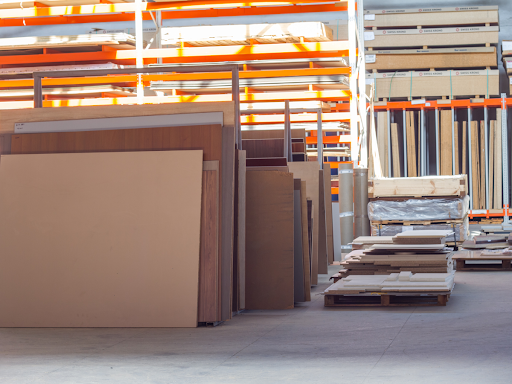
Evolution Supply offers multiple paint-grade trim options, including primed MDF and paint-grade hardwoods, suited for constructing baseboards, door and window casings, and crown molding in commercial construction. These trims come ready to prime or paint and save you the hassle of trying to match the wood grain.
Stain-Grade Trim: Where the Grain Does the Talking
Stain-grade trim is cut from wood that has a cleaner and more uniform grain, because the finish brings out the beauty of the wood, rather than hiding it. Visible knots, color variations, and differences between boards are all apparent after the stain is applied.
Because of this, builders usually save the stain-grade millwork for the high-visibility spots. Stair rails, mantels, and built-ins, as well as entryways and other areas where the warm tone and varied appearance of wood are important features, are prime candidates for stain-grade trim. The material also tends to be more expensive, and requires more care in both installation and maintenance.
How Your Interior Finishes Choice Affects Schedule and Labor
Material price tells only part of the story. The grade you pick changes how your crews work from install through paint.
Finish Carpentry Labor Costs and Paint Time
Labor plays the most significant role in trim finishing costs. For instance, one cost guide estimates that labor comprises 50-70% of the trim painting budget for interior work. This number is well above the share of materials, meaning that any opportunity to reduce the time spent on prep and finishing will have a considerable impact on the bottom line.
Pre-primed paint-grade trim can save you both time and money by reducing the overall work needed to prepare it for painting. Stain-grade materials require more labor to yield consistent results. The painters have to sand the surface more thoroughly, apply the stain in thin, even coats, and take extra precautions when nailing and handling the material to avoid marring the surface.
Spec Consistency Across Multiple Units
When you’re building dozens of units, you want to produce them uniformly as well as quickly. Paint-grade millwork offers a more uniform performance from unit to unit because the paint hides natural variances in the material.
Stain-grade trim has more variation from board to board, so it requires more careful specification to achieve visual uniformity among the units. If you specify stain-grade trim for multiple houses, consider having all the boards cut and ready to go at the same time.
Stain-Grade vs Paint-Grade Trim at a Glance
| Factor | Paint-Grade | Stain-Grade |
|---|---|---|
| Finish | Primed and painted | Stained and sealed |
| Material cost | Lower | Higher |
| Install speed | Fast | Slower, more careful |
| Finish labor | Less prep, faster | More prep, more skill |
| Unit-to-unit consistency | High | Varies with the wood |
| Best for | Baseboards, casings, crown | Stairs, mantels, feature areas |
How to Choose for Your Next Build
You don’t have to pick one grade for the whole house. Most production builders mix them. Here’s how to make the call.
Match the Grade to the Room
Begin by determining where to place the trim. Bedrooms, hallways, and utility areas rarely need a wood grain appearance, so paint grade handles these areas well. Reserve the stain grade for the prominent features that a buyer will see first, such as the entry or the stairway or a great room.
Plan Your Interior Finishes Takeoff Early
Trim mix-ups usually start at takeoff. Count linear feet by profile and by grade, then separate the two on your order. Add a realistic waste factor for stain-grade, since you’ll cull more pieces for grain and color. Lock in specialty profiles early too, because custom orders carry longer lead times than stock items.
Protect Your Material on Site
Both grades suffer when they sit in the weather. Keep trim indoors and off the ground, and stage it near the rooms where it’s going. Stain-grade pieces deserve extra attention, since scuffs and moisture show through the finish. When a supplier drops material exactly where your crew needs it, you cut down on handling, and handling is where most damage happens.
One Supplier for Your Interior Finishes and Millwork
Getting the grade right is half the battle. Getting the right material to the right place on time is the other half. At Evolution Supply, we supply interior finishes for residential and multi-unit builds, including primed MDF, paint-grade hardwoods, stain-grade options, and specialty profiles. We deliver straight to your job site with our own trucks and Princeton PiggyBack forklifts, so your finish carpenters spend their time installing trim instead of hunting for it.
Ready to price out your next interior finishes package? Request a quote and let’s get your crews moving.
Frequently Asked Questions
Q: What’s the main difference between stain-grade and paint-grade trim?
A: Paint-grade trim is intended to be covered, so it can have finger joints and varied grain. Stain-grade trim is made from select grain because the grain shows through the stain.
Q: Can I use stain-grade trim in some rooms and paint-grade in others?
A: Yes, and many builders do. A common approach is paint-grade for bedrooms, hallways, and utility spaces, with stain-grade at stairs, entries, and feature areas.
Q: Does paint-grade trim save time on the job site?
A: Usually, yes. Pre-primed paint-grade products cut down on prep, so painters can move to finish coats faster. Stain-grade trim needs more sanding and finishing time.
Q: Should I order stain-grade trim for the whole project at once?
A: In most cases, yes. Ordering the full run together helps you keep color and grain consistent across units, and it gives you room to cull pieces without running short.