If you’ve been building in the Midwest for any length of time, you already know the region doesn’t go easy on exterior materials. A single winter in Chicago or Cincinnati puts railing systems through conditions that would barely register on a job site in Phoenix or Tampa. Between the snow loads, freeze-thaw cycling, humidity swings, and UV exposure from spring through fall, the wrong material choice doesn’t just look bad after a few seasons. It generates callbacks, warranty disputes, and the kind of reputation damage that follows a contractor for years.
This guide breaks down what’s actually happening to railing systems in Midwest weather, which materials hold up based on real performance data, and what installation details separate a five-year callback from a 25-year success story.
What Midwest Weather Actually Does to Railing Systems
Most contractors understand freeze-thaw damage in the abstract, but the physics behind it are worth understanding because they explain why some materials fail while others don’t.
When temperatures rise above 32°F and then drop back below freezing, moisture expands by roughly 9 percent inside tiny cracks, seams, and pores in exterior materials. In the Midwest, this pattern can repeat dozens or even hundreds of times over a single winter. That expansion is not dramatic enough to cause instant failure. Instead, damage develops gradually. Small cracks expand, surfaces weaken, and materials lose structural strength over time.
For railing systems specifically, the failure points are predictable: post base connections work loose as the freeze-thaw cycle stresses anchors, uncoated metals corrode where moisture pools, and wood absorbs water through its grain until it warps, splits, or rots from the inside out. UV exposure from Midwest summers compounds the problem for composites that aren’t capped, causing surface fading and brittleness that accelerates structural wear.
Choosing the wrong material doesn’t just mean an ugly railing three years from now. It means a railing that fails load requirements and puts you in front of a liability conversation with a homeowner.
Aluminum Railing Systems: The Case for Going Metal in Midwest Climates
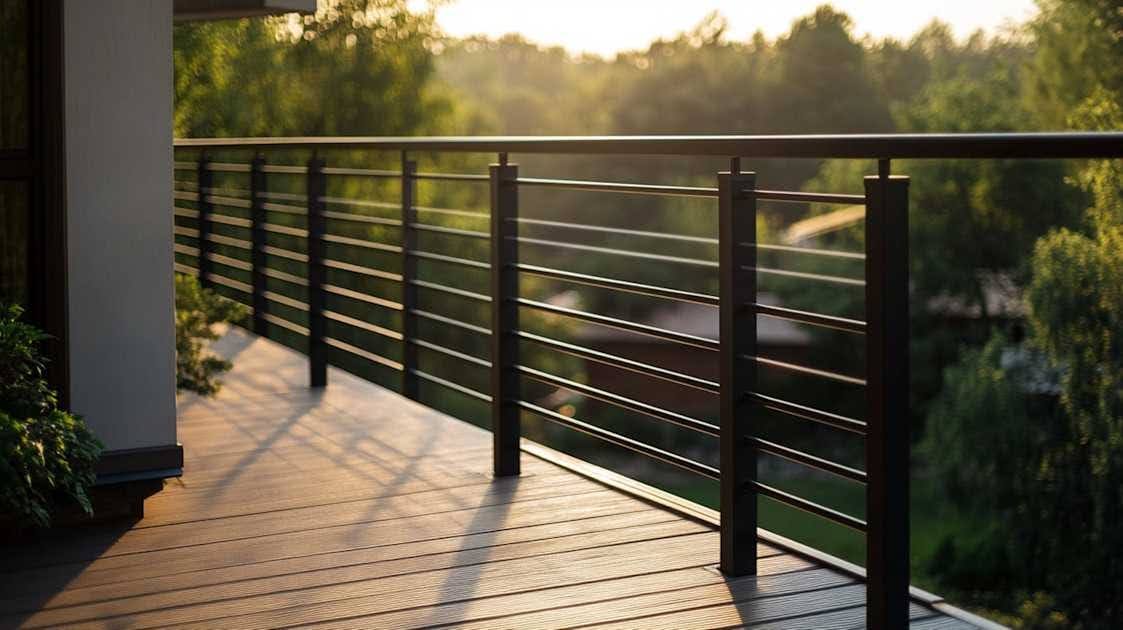
Aluminum railings are highly resistant to rust, corrosion, and weather damage. They stand up to rain, snow, sun, and even saltwater exposure with little to no wear, and despite their lightweight and slim design, they can withstand heavy use without sagging or warping.
The key advantage of aluminum in freeze-thaw environments is that the material itself doesn’t absorb moisture. There’s no internal water content to expand when temperatures drop, which means the structural integrity of the post and connection hardware is only as vulnerable as the installation detail, not the material. Powder-coated aluminum is essentially waterproof, and it responds well to changing weather conditions whether the temperature swings into extreme heat or cold.
Most aluminum railing manufacturers offer at least a 20-year warranty, and lifetime warranties are not uncommon because the material is exceptionally resilient. Westbury aluminum systems, available through Evolution Supply, are pre-engineered with simplified hardware designed for efficient installation across multi-unit projects without sacrificing structural performance.
The one maintenance consideration worth flagging for clients: surface mold can develop over time but comes off easily with a power washer once or twice a year. If the powder coating takes any damage, manufacturers typically supply touch-up kits. Outside of that, aluminum railings run largely maintenance-free.
Composite Railing Systems: When You Need Wood Aesthetics Without the Wood Liabilities
Composite railings have earned their place on Midwest job sites because they directly address the failure modes that plague wood in cold, wet climates. Unlike wood, composite materials don’t require painting, staining, or sealing. They are resistant to rot, decay, and insect infestation, and composite railings are designed to withstand harsh weather conditions with a lower likelihood of warping, cracking, or fading over time.
Not all composites are created equal, and this matters when you’re specifying for Midwest conditions. Quality composite lasts around 20 to 25 years, with some manufacturers offering performance warranties for residential use up to 50 years.
Trex railing lines carry 25-year limited residential warranties covering defects including splitting, splintering, rot, and termite damage, as well as protection against fading and staining under normal residential use. TimberTech pushes further on the premium end: their boards, depending on the line, typically carry a 30-year fade and stain warranty and a 50-year limited warranty against material defects.
For contractors who get asked about the difference between the two brands: Trex generally offers the lower starting cost and is a widely trusted composite option, while TimberTech is the stronger pick for premium projects where appearance, cooler board performance, and upgraded materials matter more than entry price. Both are well-proven in Midwest residential and commercial applications.
When comparing aluminum, vinyl, and composite for weather resistance, composite railing is considered slightly stronger overall and holds up better against high winds and regular wear and tear. For clients in exposed locations or on elevated decks subject to wind loading, that extra structural margin matters.
RDI Railing Systems: Built for Contractor Efficiency
RDI railing systems are a common specification on Midwest job sites for good reason. The modular design keeps installation straightforward across large or multi-unit projects, and the system is engineered to handle the structural demands that come with freeze-thaw cycling. For crews juggling tight project schedules, systems with pre-assembled components and clear hardware guidelines cut labor time without cutting corners on the result.
Installation Details That Determine Whether a Good Railing System Stays Good
The material is half the equation. How it goes in determines the rest. In Midwest climates specifically, three installation details make a consistent difference:
Post anchoring is the most common failure point on railing callbacks. Freeze-thaw cycling stresses connections repeatedly through winter. Posts that are improperly set or under-torqued at installation will work loose well before any material warranty runs out.
Drainage at post bases and bottom rails prevents the moisture pooling that accelerates corrosion in metal hardware and water infiltration in composite connections. Railing systems installed with attention to drainage at connection points outlast those that aren’t, regardless of material.
Spacing and baluster clearances are not optional in freeze-thaw climates. Decks more than 30 inches off the ground and stairs with four or more risers must have code-compliant railings, typically 36 to 38 inches high with baluster gaps under 4 inches. Getting these wrong during installation means a failed inspection, but getting them wrong in materials that shift seasonally means potential failure between inspections.
Code Compliance and ADA Requirements: What Changes in Harsh Climates
Meeting code in the Midwest isn’t just about the spec sheet. It’s about whether a system that passes inspection in October still meets those standards the following spring after a full winter of freeze-thaw cycling.
Both aluminum and composite systems from established manufacturers like Trex, TimberTech, RDI, and Westbury are engineered to maintain structural ratings through seasonal cycling. ADA-compliant configurations are available across all major product lines, which matters for commercial projects, multi-family builds, and any application requiring accessibility compliance. Working with a supplier who stocks code-compliant systems keeps inspections on schedule and eliminates the delay of sourcing specialty components at the last minute.
Why Material Choice Is the Single Biggest Lever on Callback Volume
Weather-related railing failures are one of the most common callback triggers for Midwest contractors. The pattern is consistent: a lower-cost material or a wood system gets specified to hit a budget number, performs acceptably through the first season, and then begins showing failure signs after the second or third full winter. By year three or four, the contractor is back on site.
Wood’s low entry price is offset significantly by long-term upkeep, while vinyl, composite, and aluminum cost more initially but typically only require a quick wash once or twice a year. That calculation looks different to the contractor who absorbs callback labor than it does to the client who originally pushed for the budget option.
Specifying aluminum or composite from the start, installed correctly, is the cleaner path. The warranty coverage exists because the materials back it up. The callbacks don’t.
How Evolution Supply Supports Midwest Contractors on Railing Projects
Evolution Supply maintains trade-focused inventory of Trex, TimberTech, RDI, and Westbury railing systems chosen specifically for their proven performance in Midwest conditions. The team works directly with contractors on product selection, project planning, and timeline management, not just order fulfillment.
Every delivery arrives with a Princeton PiggyBack forklift, so materials land where your crew needs them. That reduces handling time, keeps the site cleaner, and means your team is installing instead of moving materials around a job site.
For contractors building across the Midwest, the right materials are a starting point. A supplier who understands your schedule and your environment makes a measurable difference on every project.
Explore railing systems and exterior solutions at esbuildingmaterials.com.
Frequently Asked Questions
What is the most durable railing material for Midwest weather? Aluminum and quality composite systems are the proven choices. Aluminum handles moisture and corrosion without deteriorating, while capped composite products from brands like Trex and TimberTech are engineered to resist the freeze-thaw cycling and UV exposure that characterize Midwest seasons.
Are composite railings better than wood in cold climates? In practical terms, yes. Composite railings don’t absorb moisture the way wood does, which means they aren’t subject to the warping, cracking, and rot that accelerates on wood systems through Midwest winters. They also eliminate the maintenance cycle of sealing and staining that wood requires annually.
How do I prevent railing failures in winter? Start with weather-rated materials, follow manufacturer installation specifications for post anchoring and spacing, and pay attention to drainage at connection points. Most winter railing failures trace back to improper installation rather than material defects.
Do aluminum railings require regular maintenance? Powder-coated aluminum requires minimal upkeep. An occasional rinse to remove surface mold is typically sufficient. If the coating takes any physical damage, touch-up kits from the manufacturer protect the exposed metal.
What should I look for in a railing system to reduce installation time? Pre-engineered systems with modular components and simplified hardware are the biggest time savers on Midwest projects. Panelized aluminum systems in particular allow experienced crews to move quickly across multi-unit builds without sacrificing consistency.
Are ADA-compliant options available in aluminum and composite? Yes. Both material types are available in configurations that meet ADA requirements without compromising structural performance or weather resistance. Working with a supplier that stocks these systems eliminates sourcing delays.
How do I reduce callbacks on railing installations? Specify materials rated for Midwest conditions from the start, install to manufacturer specifications, and make sure post anchoring and drainage details are treated as non-negotiable rather than time-saving shortcuts. The callback cost always exceeds the time saved.