
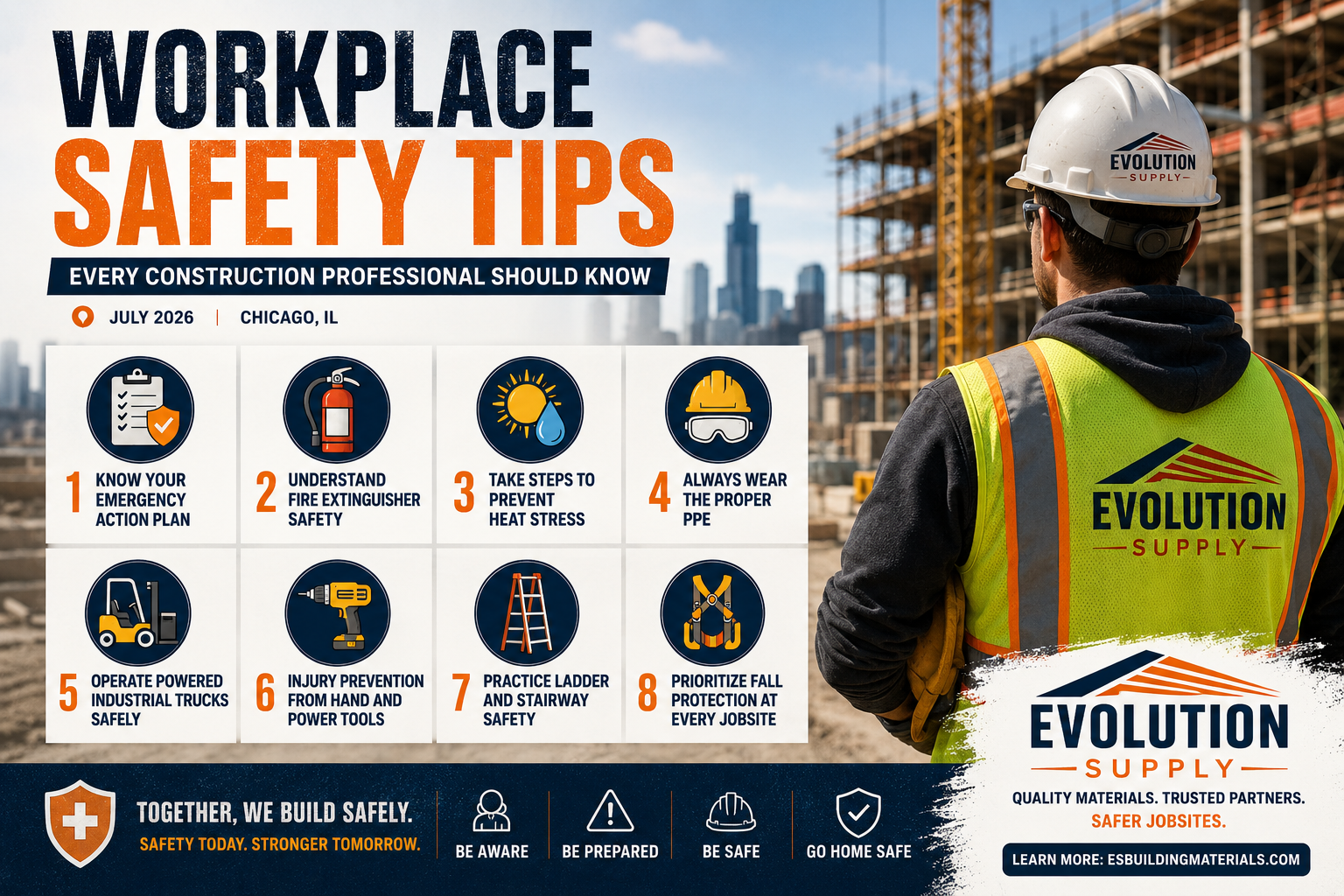
At Evolution Supply, we prioritize the safety of our employees above all else. We recently held a mandatory company-wide safety meeting at our Wauconda facility. This meeting covered essential knowledge for every professional in our sector.
Read below for some of the most important workplace safety practices everyone in our industry should understand.
1. Know Your Emergency Action Plan
Emergencies can happen without warning, and preparation is critical. Every workplace should have a clearly defined Emergency Action Plan that employees understand before an emergency occurs.
Key elements include:
- Emergency evacuation routes
- Designated assembly locations
- Procedures during severe weather
- Emergency contact information
- Fire extinguisher locations
Employees should know exactly where to go, who to report to, and what steps to follow during an emergency. Regular training and drills help ensure everyone can respond quickly and confidently when every second matters.
2. Understand Fire Extinguisher Safety
The widely recognized P.A.S.S. method provides a simple process:
- Pull the safety pin
- Aim at the base of the fire
- Squeeze the handle
- Sweep from side to side
Every employee should understand how to use fire extinguishers correctly. They should only be used on small, manageable fires. If a fire becomes uncontrollable, evacuate and contact emergency responders immediately.
3. Take Steps to Prevent Heat Stress
Construction professionals frequently work outdoors during hot weather, making heat stress one of the industry’s most significant seasonal hazards.
Heat-related illnesses can develop quickly and range from mild heat cramps to life-threatening heat stroke.
Several factors increase risk, including:
- High temperatures
- Direct sunlight
- High humidity
- Heavy physical activity
- Inadequate hydration
- Certain medical conditions or medications
Drink water regularly, take shade breaks on schedule, and watch coworkers for dizziness or confusion. Staying hydrated and recognizing symptoms early can prevent serious medical emergencies.
4. Always Wear the Proper Personal Protective Equipment (PPE)
Personal Protective Equipment remains one of the simplest and most effective ways to reduce workplace injuries.
Depending on the task, PPE may include:
- Hard hats
- Safety glasses
- High-visibility apparel
- Gloves
- Hearing protection
- Steel-toe footwear
- Respiratory protection
Employees should understand not only what PPE is required but also why it’s necessary. Damaged or worn equipment should be replaced immediately, and workers should never hesitate to request new PPE when needed.
A few moments spent putting on proper protection can prevent injuries with lifelong consequences.
5. Operate Powered Industrial Trucks Safely
Forklifts and rough terrain powered industrial trucks are indispensable on many construction sites, but they also present serious hazards when operated improperly.
Safe operation begins before the equipment is even started.
Operators should:
- Complete pre-shift inspections
- Verify equipment is functioning properly
- Understand load capacity limitations
- Maintain load stability during transport
- Follow safe fueling and charging procedures
- Exercise caution around loading docks and pedestrians
Proper training combined with hands-on evaluations helps ensure operators remain qualified and confident while reducing the likelihood of preventable accidents.
6. Injury Prevention from Hand and Power Tools
Even the most familiar tools that workers use every day can become dangerous when they are misused or if they are damaged.
Before beginning work every day, employees should inspect tools for:
- Frayed electrical cords
- Broken guards
- Loose components
- Excessive wear
- Mushroomed heads on impact tools
- Cracked handles
Workers should always follow manufacturer instructions and never remove built-in safety guards. Never improvise or use any tool for a job it wasn’t designed to do.
Additional safety practices include:
- Using Ground Fault Circuit Interrupters (GFCIs) when operating electric power tools in wet or damp environments
- Disconnecting power before servicing equipment
- Properly storing tools when not in use
- Removing damaged tools from service immediately
Fuel-powered tools such as cut-off saws, chainsaws, and generators carry severe risks from flammable vapors, extreme heat, and toxic exhaust. The most crittical rule is to always shut down the engine and allow it to cool before refueling to prevent accidental ignition.
7. Practice Ladder and Stairway Safety
Falls from ladders remain one of the leading causes of workplace injuries in the construction industry.
Choosing the correct ladder for the job is just as important as using it properly.
Safe ladder practices include:
- Inspecting ladders before every use
- Selecting the appropriate ladder type and height
- Ensuring the ladder placed on stable, level ground
- Maintaining three points of contact while climbing
- Setting extension ladders at the proper angle
- Never standing on the top step of a stepladder
- Using stairway handrails whenever available
Taking shortcuts while working at height dramatically increases the risk of serious injury.
8. Prioritize Fall Protection at Every Jobsite
Fall protection remains one of the most critical components of construction safety because falls continue to be among the leading causes of serious injuries and fatalities.
Every worker should be able to identify potential fall hazards before beginning work.
Common safety measures include:
- Proper guardrail systems
- Floor hole protection
- Personal fall arrest systems
- Site-specific fall protection plans
- Rescue procedures in case of a fall
Employers should ensure that fall protection equipment is inspected regularly and that employees understand both how to use it and when it is required.
Effective planning before work begins can significantly reduce fall-related incidents.
Building a Stronger Safety Culture
Creating a safe workplace isn’t accomplished through a single meeting or annual training session. It requires ongoing education, consistent communication, accountability, and a commitment from everyone on the jobsite.
When employees understand hazards, use the proper equipment, inspect their tools, and follow established safety procedures, everyone benefits. Companies experience fewer injuries, reduced downtime, improved productivity, and stronger morale. Most importantly, workers return home safely at the end of every shift.
Build Safely with Evolution Supply
Safety and quality go hand in hand. Evolution Supply is more than just a building materials provider; we’re a comprehensive partner for national builders, general contractors and carpenter contractors. We’re dedicated to supporting contractors and builders with dependable high-quality building materials, trusted products, and a commitment to helping jobsites operate safely and efficiently.
To learn more about our products and how we support construction professionals, visit https://esbuildingmaterials.com.
Frequently Asked Questions
1. Why is workplace safety so important in the construction industry?
Construction environments involve heavy equipment, elevated work areas, power tools, changing weather conditions, and multiple trades working simultaneously. Following proper safety procedures helps reduce injuries, protect employees, improve productivity, and keep projects on schedule.
2. What should every employee know before starting work?
Every employee should understand emergency procedures, required PPE, hazard recognition, equipment operation guidelines, evacuation routes, and company safety policies. Ongoing safety training reinforces these critical practices.
3. What are common signs of heat stress?
Symptoms may include excessive sweating, dizziness, headache, muscle cramps, nausea, fatigue, confusion, or fainting. Anyone experiencing these symptoms should move to a cooler location, hydrate, and seek medical attention if symptoms worsen.
4. Why are daily equipment and tool inspections necessary?
Routine inspections help identify damaged tools, worn components, electrical hazards, and other issues before they cause injuries or equipment failures. Taking unsafe equipment out of service immediately helps prevent accidents.
5. What is the P.A.S.S. method for using a fire extinguisher?
P.A.S.S. stands for Pull the pin, Aim at the base, Squeeze the handle, and Sweep from side to side. This method provides a simple framework for using a portable fire extinguisher safely on small fires.
6. How does a strong safety culture benefit construction companies?
A proactive safety culture helps reduce injuries, lower insurance costs, improve employee morale, increase productivity, minimize project delays, strengthen client confidence, and ensure workers return home safely every day.